
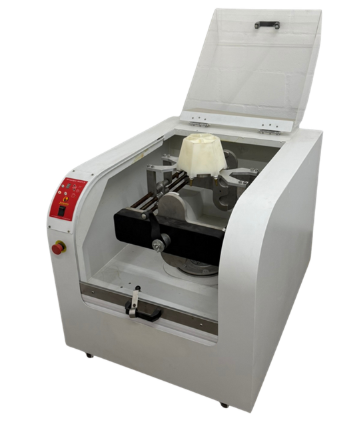
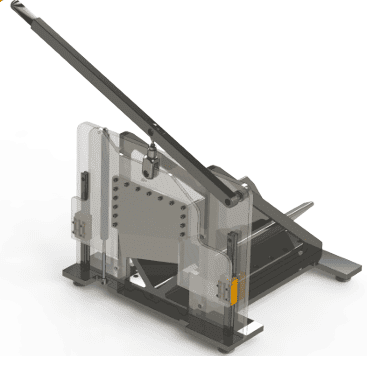
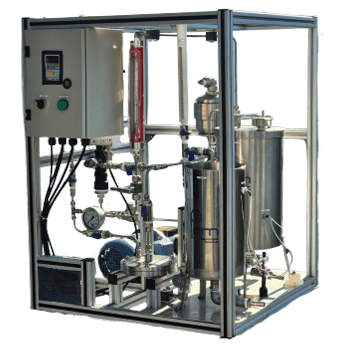
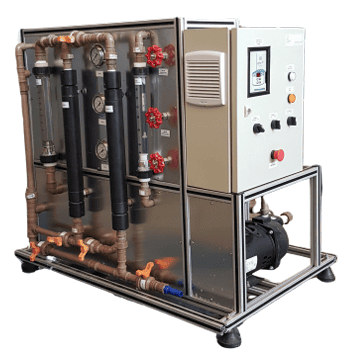
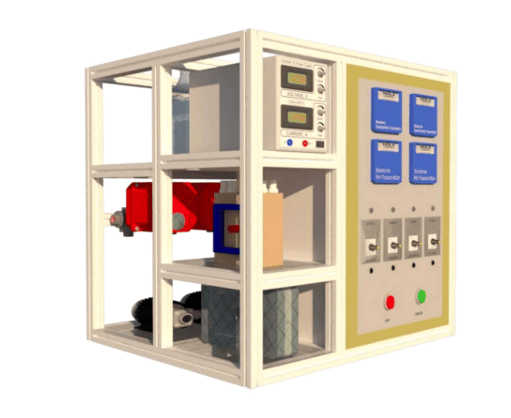
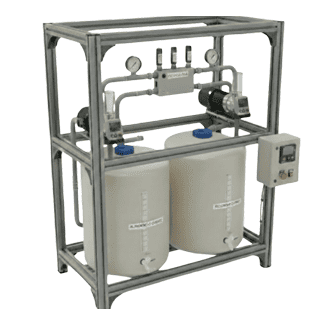

PAM Selective Membranes develops laboratory systems and pilot units to simulate real operating conditions, validate technical parameters, and accelerate the transition from the laboratory to industrial scale.
PAM Membranas Seletivas specializes in separation processes using
membranes and works to transform academic knowledge into
technical solutions applicable to industry and research. The first company in Latin America to
produce hollow-fiber membranes, PAM emerged as a spin-off from the Laboratory of
Membrane Separation Processes at COPPE/UFRJ, which has been conducting
continuous research in the field since 1968.
PAM’s laboratory product line was developed to serve laboratories, research centers
, and industrial R&D facilities that require reliable, reproducible, and
technically robust equipment for the development, characterization, and validation of
membranes and processes. The systems support everything from fundamental studies to the
safe transition to pilot scale.
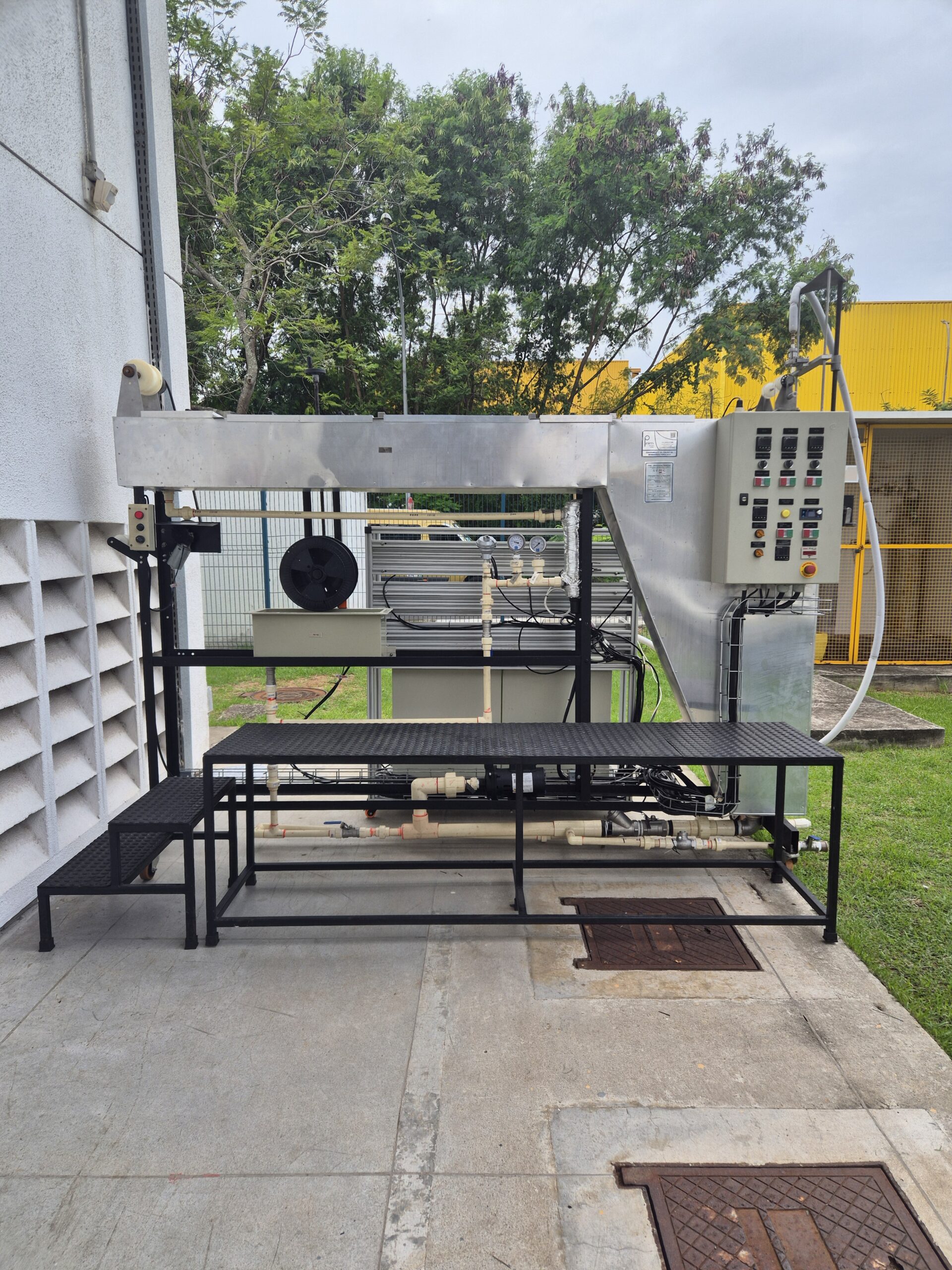
PAM Membranas’ hollow fiber production equipment was developed at
based on decades of practical experience in the development of such membranes.
Our accumulated experience as a pioneer in hollow fiber production in Latin America
is directly incorporated into the equipment’s design. Each component was
designed to reproduce, on a laboratory scale, the actual spinning conditions used
in the development of commercial membranes.
The systems allow for rigorous control of the key process variables
, ensuring reliability, repeatability, and predictability in the results, both in academic research and in industrial R&D and technology validation.
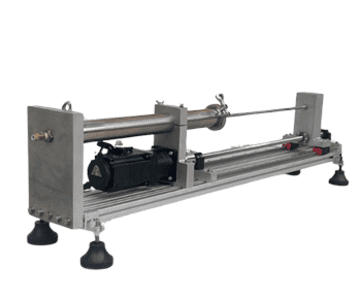
Specifically designed for the production of
hollow-fiber membranes in research settings.
It combines precision, stability, and excellent cost-
.
Essential for ensuring the quality of the membrane's diameter and morphology.
Extruders designed for precise control of polymer flow
, ensuring uniform hollow fibers
that are stable and highly reproducible. Compatible
with research, prototyping, and small-scale production
.
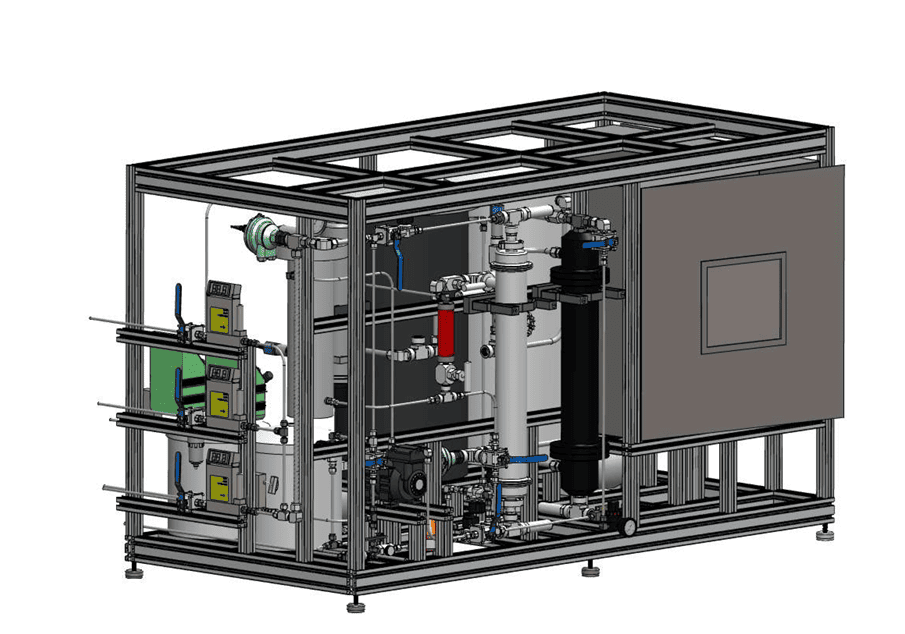
All PAM Membranas filtration equipment is developed based on
in-house engineering, close integration with academic research, and a focus on practical application,
enabling reliable, scalable results that are directly transferable to pilot
and industrial scales.
With robust engineering, appropriate instrumentation, and automation and data acquisition options
, our systems provide a secure platform for applied research,
process optimization, and the transition from laboratory scale to pilot and industrial scale.
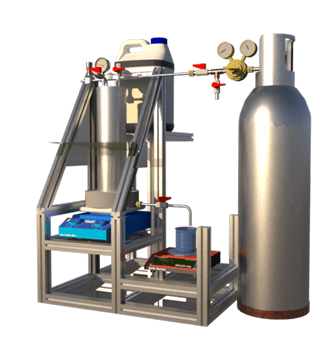
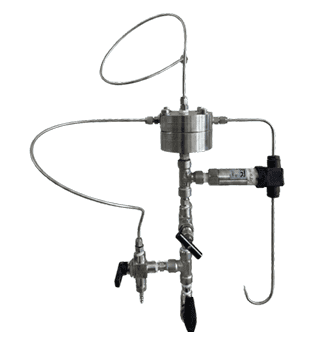
Laboratory systems for evaluating the performance, permeance, and fouling resistance of flat-sheet membranes.
Designed for reliable laboratory testing of
ceramic membranes, enabling the evaluation of
permeance, performance, and resistance to fouling
under controlled operating conditions.
Developed for simple, fast, and
reliable testing of small-scale flat-sheet nanofiltration (NF)
and reverse osmosis (RO) membranes, enabling
evaluation of the membrane’s permeance, efficiency, and
behavior under controlled conditions through
pressurization with inert gas.
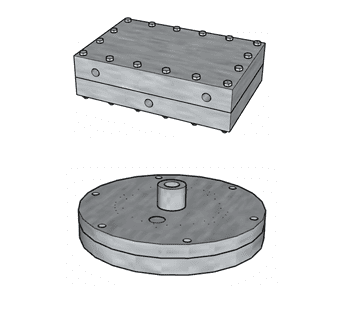
Custom-made permeation cells, compatible with
PAM Membranas equipment. Available
in disc or rectangular versions, designed for
precise laboratory testing of flat membranes.
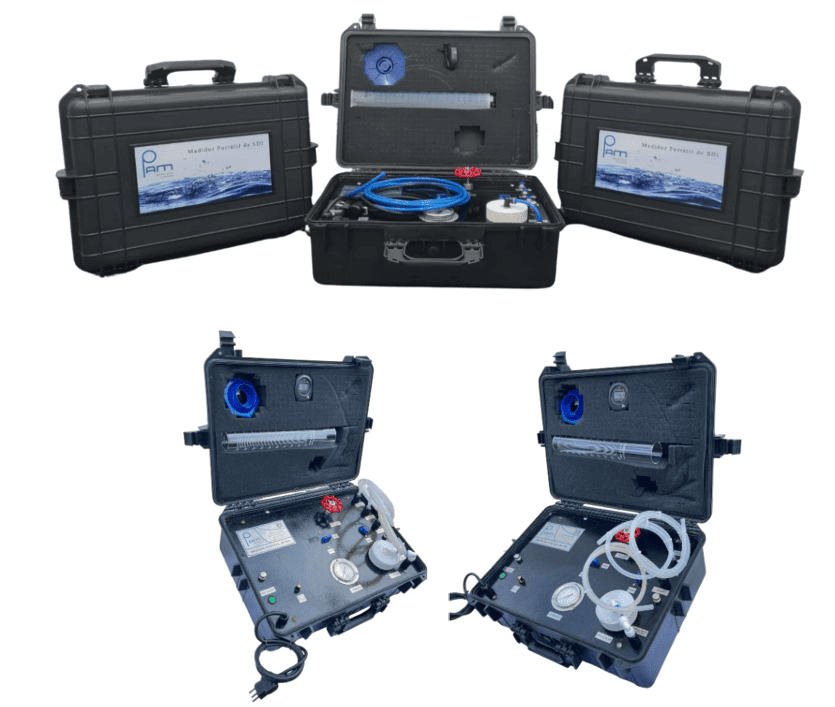
Portable kit for analyzing fine sediments (SDI – Silt Density Index and MFI – modified
fouling index) present in water. Helps assess the potential for membrane fouling in
filtration systems, determines the quality of the feedwater, and identifies the need for pre-
treatment.
It enables on-site analysis at multiple points within the same water source,
eliminating the need for large sample collections, reducing
transportation costs, and streamlining the technical analysis of the process. In addition, it makes
it possible to generate real-time water quality maps and allows for the optimization of
treatment systems.
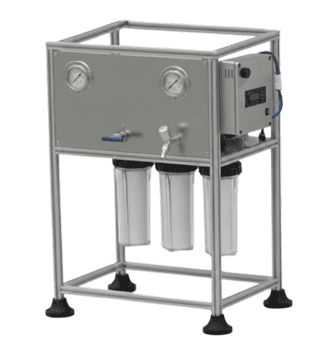
Designed to supply demineralized w
in laboratory applications. The
system incorporates an activated carbon filter,
microfiltration, reverse osmosis, and an ion exchange column
, ensuring water quality suitable for
laboratory use, with continuous monitoring of
conductivity.
👉 Talk to our technical team and find out how to structure your project with security, precision, and scalability.
Laboratory equipment for research, characterization, and validation of membrane separation processes, with a focus on microfiltration, ultrafiltration, nanofiltration, reverse osmosis, and gas permeation
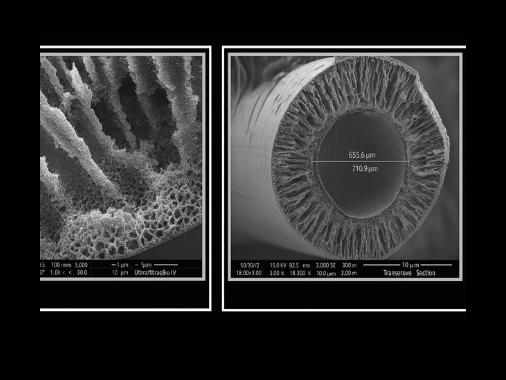
CHARACTERISTICS OF HOLLOW ULTRAFILTRATION FIBERS:
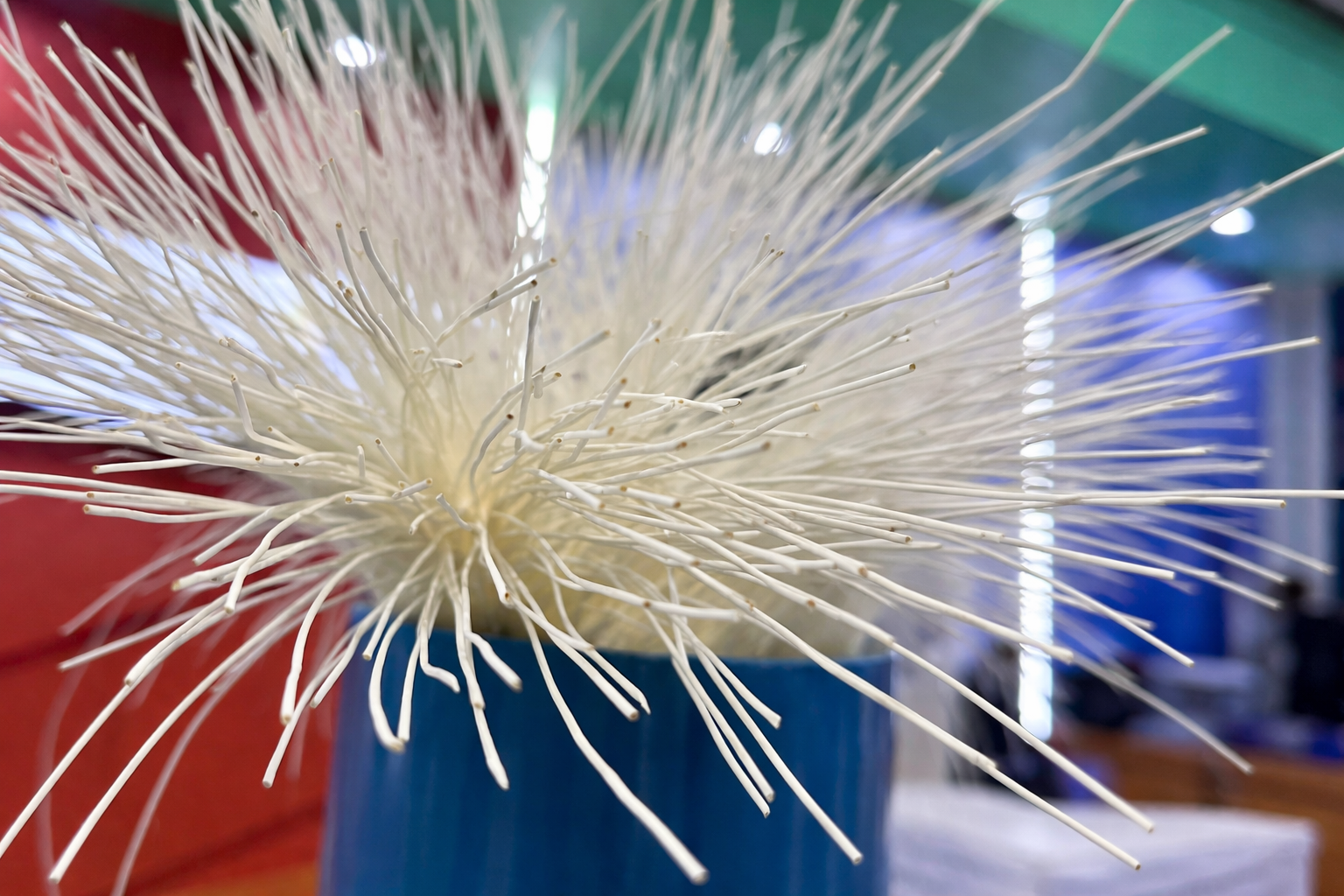
a) Membranes with a cylindrical geometry, of the hollow-fiber type (Figure 1);
b) Material of the hollow fibers: poly(ether sulfone);
c) Outer diameter of the fibers: between 0.8 and 0.9 mm;
d) Fibers with a selective outer layer;
e) UF fibers exhibit 95.0% effective retention for compounds with a molecular weight greater than 50 kDa;
f) Filtration occurs from the outside to the inside of the fibers;
g) The ultrafiltrated extract flows through the interior of the fibers;
h) Module construction material: weldable PVC;
i) Operating pressure: depends on the extract to be processed in the equipment. The critical pressure for each type of extract must be determined;
j) Maximum operating pressure: 5 bar;
l) Maximum operating temperature: up to 55.0°C;
m) pH: 2.0 to 13.0.
CHARACTERISTICS OF HOLLOW MICROFILTRATION FIBERS:
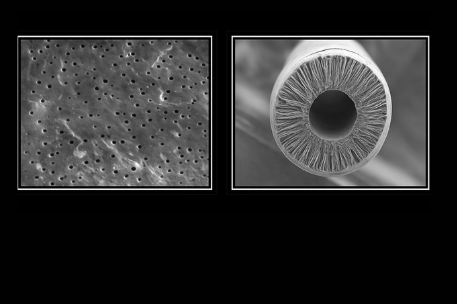
a) Membranes with a cylindrical geometry, of the hollow-fiber type;
b) Material of the hollow fibers: poly(imide);
c) Outer diameter of the fibers: between 0.9 and 1.0 mm;
d) Fibers with a selective outer layer;
e) Average pore size on the outer surface of the fibers: 0.4 µm (Figure 1);
f) Retention of 99.99% of the microorganisms and suspended solids present in the extract to be processed;
g) Filtration occurs from the outside to the inside of the fibers;
h) The microfiltrate flows through the interior of the fibers;
i) Operating pressure: dependent on the stream to be processed by the equipment. The critical pressure for each type of feed stream must be determined;
j) Maximum operating pressure: 5 bar;
l) Maximum operating temperature: up to 55.0°C;
m) pH: 2.0 to 13.0.
Devices that use a membrane to create a large contact area between two phases (gas-liquid) without allowing them to disperse.
One phase flows through one side of the membrane and the other through the other side. Mass transfer occurs through the pores without the phases mixing.
Water degassing (removal of O2 and CO2), carbonation of beverages, liquid-liquid extraction without emulsification.
A process for separating liquid mixtures in which the permeate is removed as vapor; effective for azeotropic mixtures.
A component preferentially permeates through the membrane and evaporates on the permeate side, which is maintained under vacuum.
Solvent dehydration (ethanol, isopropanol), removal of volatile organic compounds (VOCs) from water, separation of organic-organic mixtures.
The process with the highest rejection capacity. It removes virtually all dissolved salts and contaminants, producing water of the highest purity.
It applies pressure greater than the solution's osmotic pressure, forcing water to pass through the membrane in the opposite direction of the natural flow, leaving the salts behind.
Seawater desalination, production of ultrapure water for industries (pharmaceutical, semiconductor), and purification of water for consumption.
An intermediate process between UF and reverse osmosis, with pore sizes ranging from 1 to 10 nanometers. It removes multivalent ions (hardness) and low-molecular-weight organic molecules.
It operates at higher pressures than UF. It separates components based on size and electric charge, allowing monovalent ions to pass through.
Water softening, partial desalination, pesticide removal, wastewater recycling.
Similar to microfiltration, but with smaller pores (0.01 to 0.1 micrometer), capable of retaining viruses and macromolecules such as proteins.
It uses hydrostatic pressure to force the solvent through the membrane, while high-molecular-weight solutes are retained.
A membrane separation process that removes suspended particles, bacteria, and colloidal solids in the range of 0.1 to 10 micrometers. It operates at low pressures.
Water or a fluid is forced to pass through a microporous membrane. Particles larger than the pores are retained on the surface of the membrane.
✅ High flow rate
✅ Low energy consumption
✅ Effective removal of bacteria
✅ Easy to use